

What Does a Rushed Decision Actually Cost You?
Owners rarely choose to rush the biggest decision of their working lives. The rush arrives on its own, through a new role, a health event, family pressure, or plain exhaustion, and the decision gets made under it. This article looks at what a rushed succession or sale decision actually costs, and how to buy back the time to make it well. It draws on Annie Duke's How to Decide, on Gary Klein's premortem method published in Harvard Business Review, on Dennis Carey and Dayton Ogden's CEO Succession, and on William Rothwell's work on preparing successors. It includes Dr. MaryJane Hanlon's own account of a sale made under pressure, and shows how the Right question of The Succession Filter™ protects an owner from deciding against a deadline.
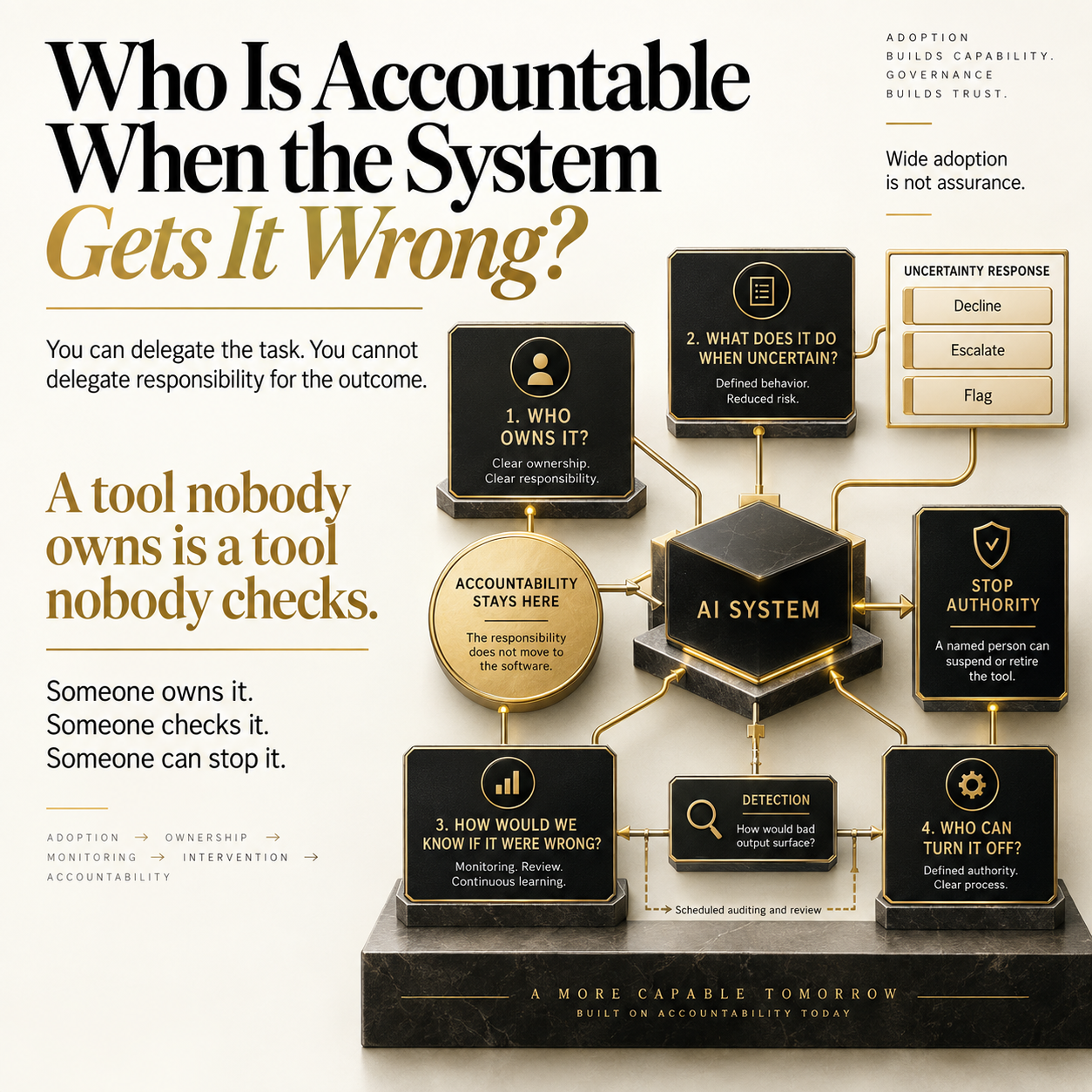
Who Is Accountable When the System Gets It Wrong?
Accountability does not transfer with the task. Four governance questions that decide whether a tool is owned or merely installed.

What Question Makes a Vendor Uncomfortable?
Seven polite questions that separate a company with results from a company with a story. The reaction tells you as much as the answer.

Why Do the Best Numbers Always Come From the Smallest Studies?
The best numbers come from the smallest studies, and it is not a conspiracy. Two questions that tell you what a claim is worth.

Is This Tool Solving Your Problem or Someone Else's?
A tool can work perfectly and still solve someone else's problem. Write your constraint in one sentence first, and the evaluation gets easy.

What Should You Never Hand to a Machine?
AI made prediction cheap, which made judgment expensive. Four kinds of decision that should never cross the line, and how to tell.
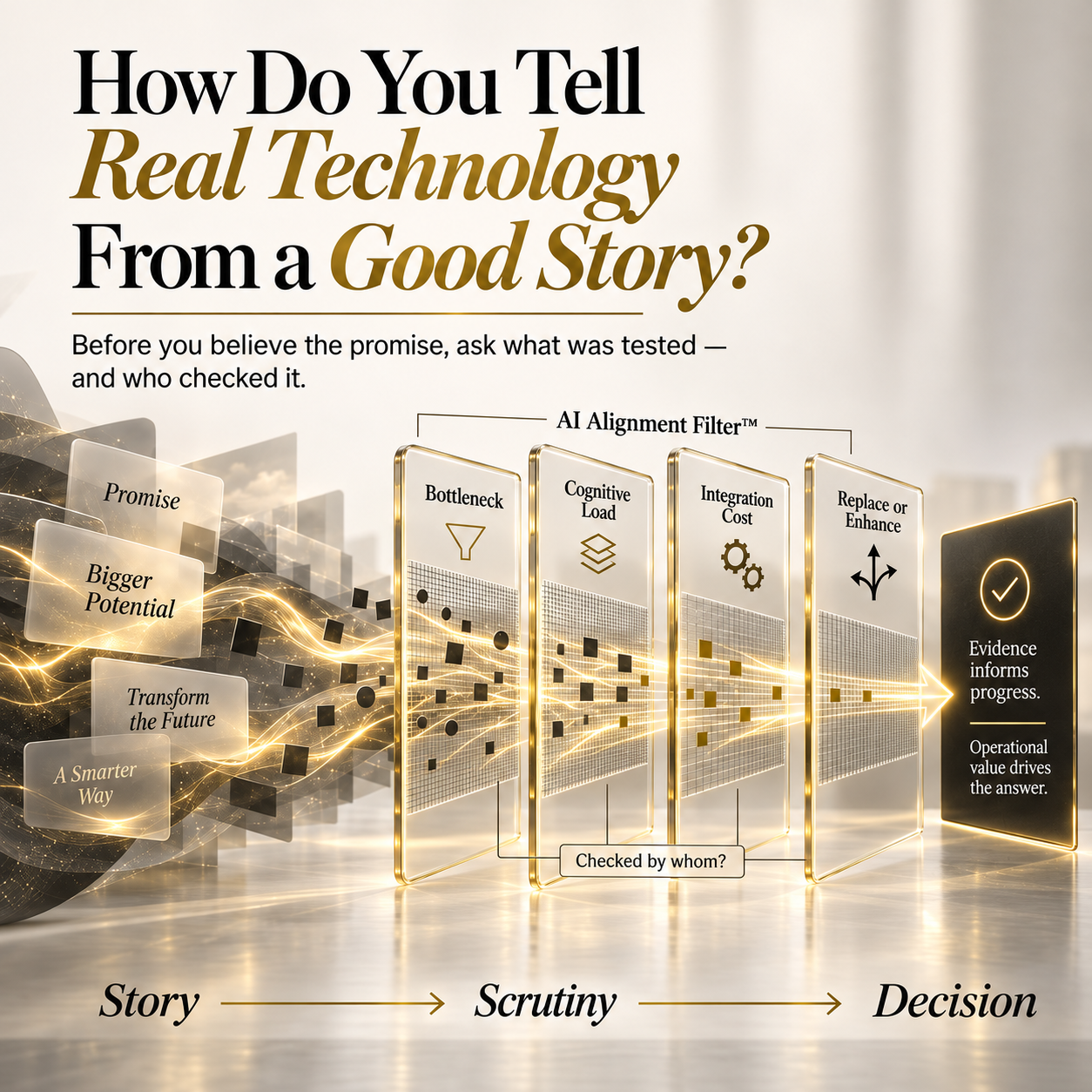
How Do You Tell Real Technology From a Good Story?
Every technology arrives twice. First as a story, and much later as a thing that either works in your building or does not. Telling the two apart is a leadership skill, not a technical one. The question is never whether a technology is real. It is what the technology has been tested to do, who ran the test, and what they had at stake in the answer. The AI Alignment Filter™ runs that question in four steps: name the bottleneck, identify which kind of cognitive load the tool addresses, count the true cost of integration, and decide whether the tool replaces judgment or enhances it. Before any of that, establish one thing. Are you looking at a regulated technology that a disinterested third party has examined, or at software that someone is selling you? Both can be excellent. They demand entirely different questions.

Why Does Everything Still Run Through You?
Delegating a task isn't empowerment. How to move real decision authority to your team — Marquet's “I intend to” — without creating chaos.

Why Is Clarity the First Thing to Disappear When Everything Gets Uncertain?
Under uncertainty, vagueness feels safe — and costs the most. Here's why clarity is the leader's job when it's hardest, and how to manufacture it.

How Delayed Decisions Show Up in Your Practice (And Cost You More Than You Realize)
Delayed decisions in a dental practice impact case acceptance, patient trust, and production. Learn how leadership clarity drives better outcomes.

The Hidden Cost of Indecision Inside a Business
Indecision in leadership creates bottlenecks, confusion, and slow performance. Learn how delayed decisions impact your business and how to fix it.

How Strong Leaders Make Decisions Without All the Information
Learn how strong leaders make decisions in uncertainty without waiting for perfect information. A clear framework for confident leadership action.

Emotional Discipline in Leadership: The Standard Your Team Feels Before You Say a Word
Emotional discipline in leadership creates clarity in uncertain times. Learn how to lead with confidence when your team needs stability most.

Leadership in Uncertainty: What Your Team Needs Right Now Isn’t More Information
Leadership in uncertainty requires clarity, not more information. Learn how strong leaders create stability when teams need it most.

How Smart Leaders Are Quietly Using AI (Without Talking About It Constantly)
How smart leaders are using AI quietly to reduce cognitive load and reclaim strategic thinking time.

Signal vs. Noise: What Effective Executives Understand About AI
What has actually changed in AI? A leadership perspective on filtering signal from noise in executive decision-making.