
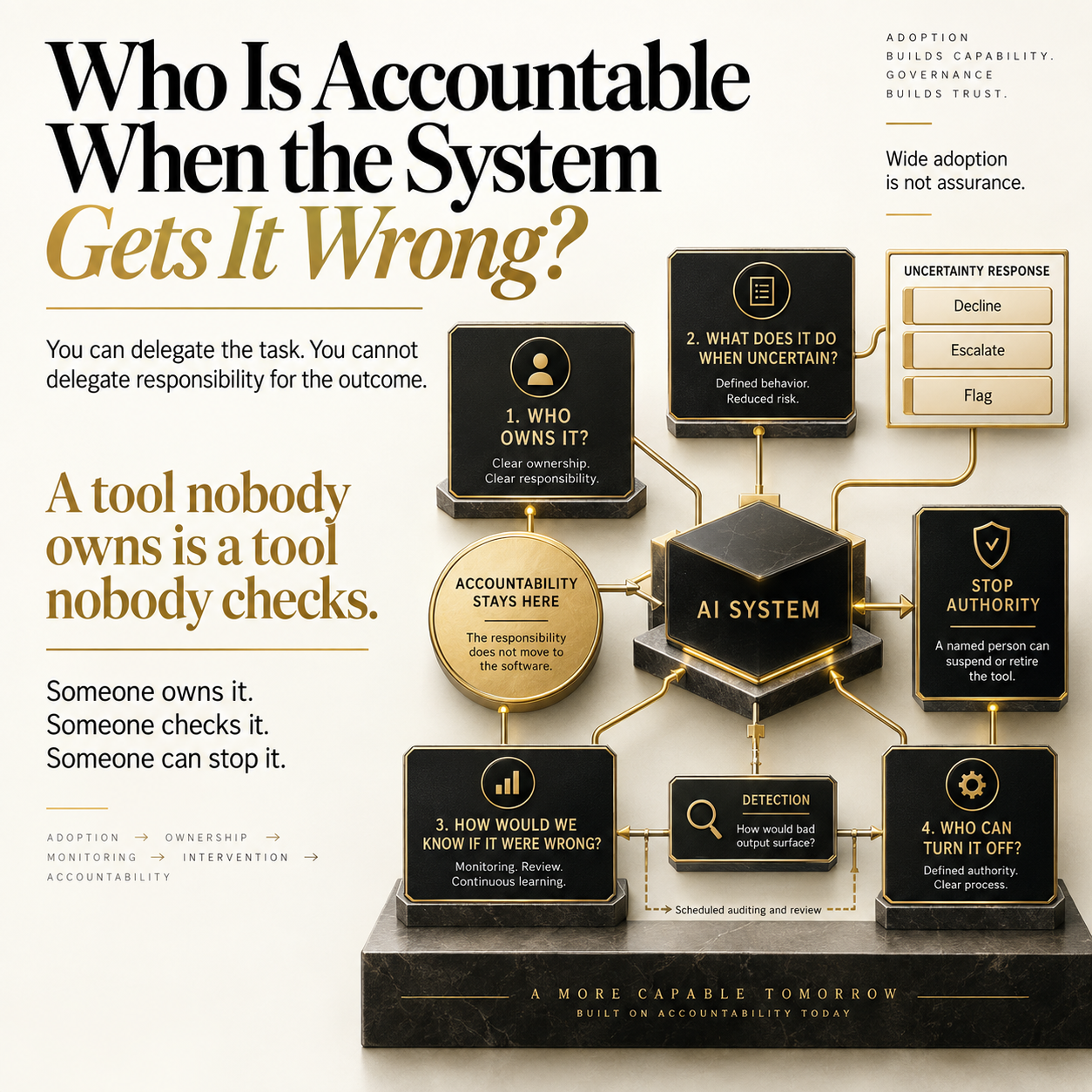
Who Is Accountable When the System Gets It Wrong?
Accountability does not transfer with the task. Four governance questions that decide whether a tool is owned or merely installed.

Why Do the Best Numbers Always Come From the Smallest Studies?
The best numbers come from the smallest studies, and it is not a conspiracy. Two questions that tell you what a claim is worth.

What Should You Never Hand to a Machine?
AI made prediction cheap, which made judgment expensive. Four kinds of decision that should never cross the line, and how to tell.
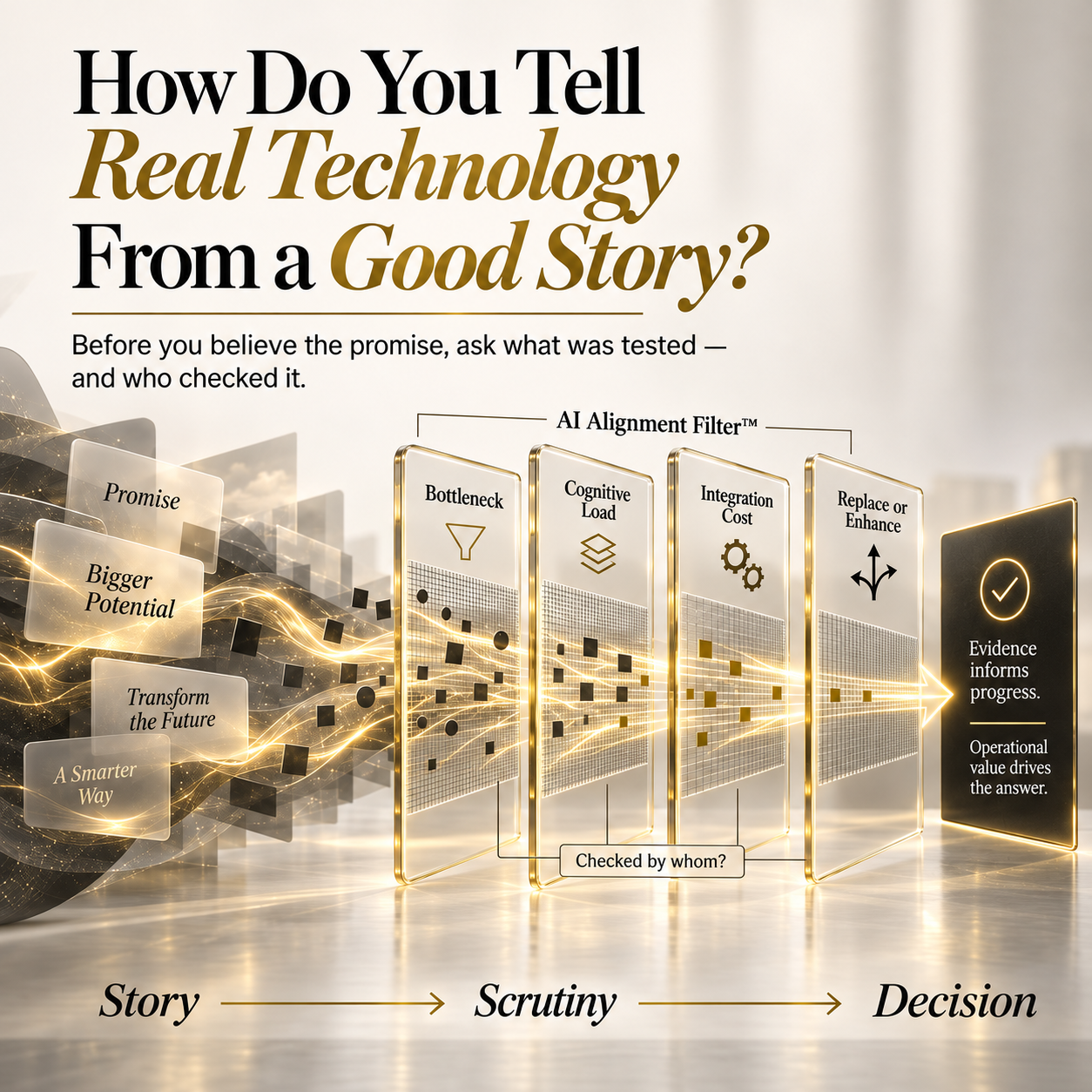
How Do You Tell Real Technology From a Good Story?
Every technology arrives twice. First as a story, and much later as a thing that either works in your building or does not. Telling the two apart is a leadership skill, not a technical one. The question is never whether a technology is real. It is what the technology has been tested to do, who ran the test, and what they had at stake in the answer. The AI Alignment Filter™ runs that question in four steps: name the bottleneck, identify which kind of cognitive load the tool addresses, count the true cost of integration, and decide whether the tool replaces judgment or enhances it. Before any of that, establish one thing. Are you looking at a regulated technology that a disinterested third party has examined, or at software that someone is selling you? Both can be excellent. They demand entirely different questions.

Would You Take the Hit for Your People?
Championing your people is tested when it costs you. Sinek's “leaders eat last,” Brown's daring leadership, and the final move of bringing out their best.

What Is Your Team Afraid to Tell You?
The most dangerous information in your company is what people won't say. How psychological safety — and going first with vulnerability — unlocks the truth.

Why Does Everything Still Run Through You?
Delegating a task isn't empowerment. How to move real decision authority to your team — Marquet's “I intend to” — without creating chaos.

Why Is Your Best Advice Making Your Team Weaker?
Your best advice may be quietly weakening your team. Why coaching — asking, not telling — grows people faster, and how to catch your “Advice Monster.”

What Do You See in People Before They See It in Themselves?
Belief is a leadership skill, not a feeling. How seeing potential early — before people see it themselves — quietly changes what your team becomes.

Why Is Rest the Skill High Performers Neglect Most?
Rest isn’t the reward for work — it’s part of it. Use the Hanlon Capacity Reserve to make Restore a skill and lead at a pace that lasts.

Why Do Capable Leaders Say Yes to Too Much?
Capable leaders say yes to too much. Use the Hanlon Capacity Reserve and the strategic no to protect your time, energy, and what matters most.

Why Can't You Think the Way You Used To?
You haven’t lost your focus — it’s being fragmented. Use the Hanlon Capacity Reserve to protect attention, the scarcest resource you own

Is Time Really Your Scarcest Resource — or Is It Energy?
Time isn't your scarcest resource — energy is. Learn to read your leadership capacity with the Hanlon Capacity Reserve: Demand, Protect, Restore.

Technology Should Not Redefine Leadership
AI should support leadership—not redefine it. A perspective on protecting culture and integrity in the AI era.

The Disciplined Pursuit of Less in an AI World
AI can increase productivity—but without essentialism, it multiplies overload. A leadership perspective on disciplined automation

Begin With the End in Mind — Before You Use AI
AI increases speed—but clarity must come first. A leadership perspective on using AI with intention and strategic focus.

Signal vs. Noise: What Effective Executives Understand About AI
What has actually changed in AI? A leadership perspective on filtering signal from noise in executive decision-making.